


On August 6, 2009, the Senate confirmed Sonia Sotomayor’s nomination to the Supreme Court by a vote of 68 to 31. Of the 40 Republican senators, only nine voted for Sotomayor.
The vote stands in stark contrast to the Senate’s vote 16 years earlier on Bill Clinton’s first nominee to the Supreme Court. Ruth Bader Ginsburg was confirmed by a vote of 96 to 3. Of the 44 Republican senators, 41 voted for Ginsburg. The three senators who voted against her—Jesse Helms, Don Nickles, and Bob Smith—were very conservative and strongly pro-life.
Let’s wrap up the Sotomayor nomination by taking a closer look at the vote and by tossing in a few nuggets.
***
The big lesson from the Sotomayor vote is that most Republicans were now fighting Supreme Court nominations on the ground of judicial philosophy. Back in 1993, they were wedded to the “deference” model. Under that approach, senators deciding whether to support or oppose a nominee of an opposite-party president would ignore or demote considerations of judicial philosophy and focus primarily on whether the nominee met some suitable standard of intellect, character, and experience.
As I’ve discussed, Republican senators might have had strategic reasons (or illusions) in 1993, or they might have been acting in their own narrow interests. But any hope that Democrats would reciprocate deference had been extinguished by the Roberts and Alito confirmation battles in 2005 and 2006. Further, the conservative base of the Republican party had so mobilized over judicial confirmations that voting for a judicial liberal was risky for most Republican senators.
A look at the nine Republicans who voted for Sotomayor is revealing.
Four of the nine—Christopher Bond, Judd Gregg, Mel Martínez, and George Voinovich—had already announced that they wouldn’t be seeking re-election in 2010.
Two—Olympia Snowe and Susan Collins—were moderates (or moderate liberals) from Maine and perhaps the only two Republicans whose constituency gave them an electoral incentive to vote for Sotomayor.
Lamar Alexander, also a moderate, had just been re-elected in Tennessee in 2008, so he had five more years to calm things down. (In August 2013, Tea Party groups threatened him with a primary challenge, but Alexander deftly marginalized his conservative opponent.)
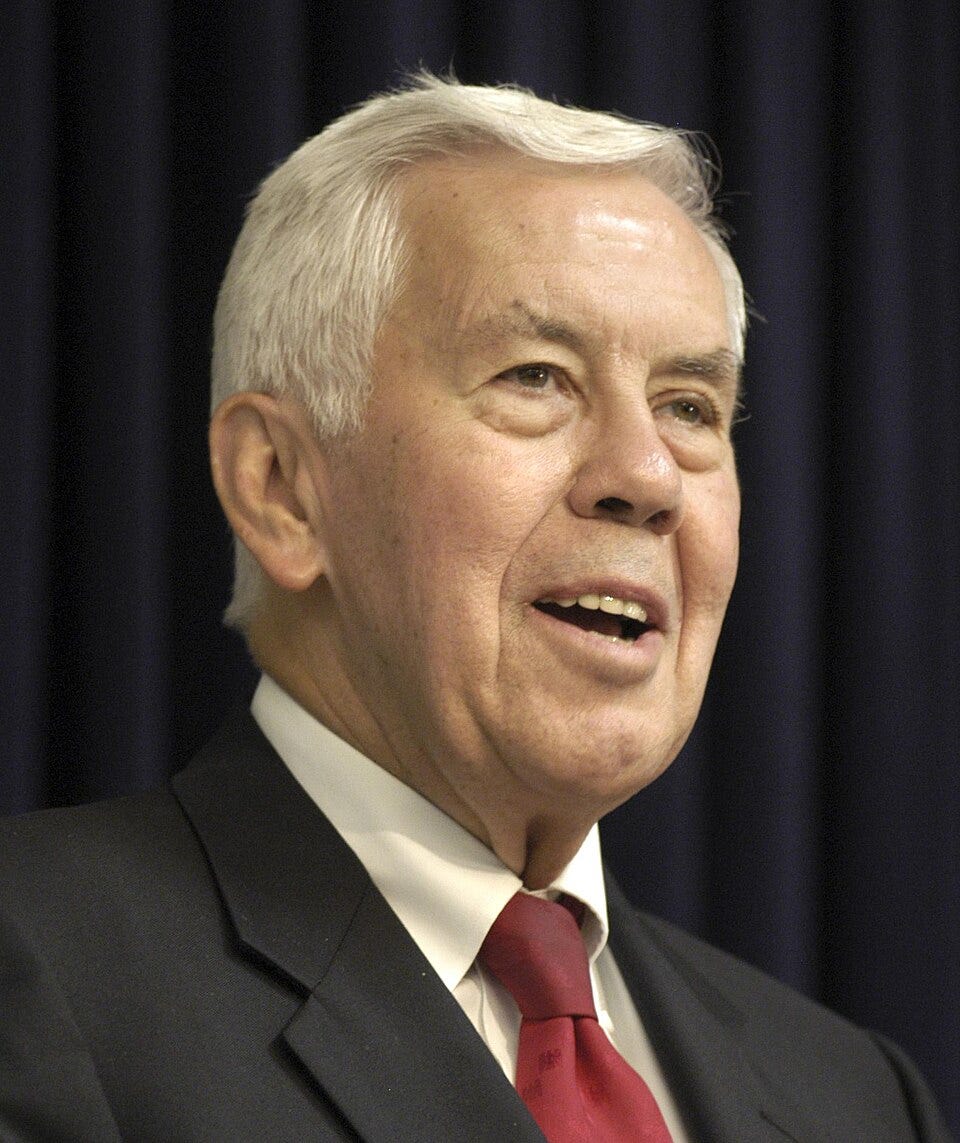
Richard Lugar, having been elected to a sixth term in 2006 with 87.4% of the vote, might have felt invincible. He would end up being trounced in the Republican primary in 2012, and his votes for Sotomayor and for Elena Kagan in 2010 were widely regarded as a major cause of his defeat.
The ninth senator, Lindsey Graham, is more perplexing. Graham, like Alexander, had just been elected in 2008 to his second term, but South Carolina was much more conservative than Tennessee, so Graham had more at risk from voting for Sotomayor. For better or worse, Graham seemed to believe his own rhetoric about deference: “I feel that [Barack Obama] deserves some deference on my part when it comes to his first selection to the Supreme Court.”
***
Sotomayor’s record and testimony made it much easier for Republicans to vote against the first Hispanic nominee to the Supreme Court. For example:
Her dismissive treatment of the racial-discrimination claims brought by twenty firefighters, nineteen whites and one Hispanic, in Ricci v. DeStefano, and the Supreme Court’s repudiation of her position right in the middle of her confirmation battle.
Her belief that a “wise Latina” judge could and should draw on the “richness of her experiences” to “reach a better conclusion than a white male who hasn’t lived that life.”
Her blatantly false testimony about her permissive position on looking to foreign and international law to decide the meaning of provisions of our Constitution.
Her membership (before becoming a judge) on the board of the Puerto Rican Legal Defense and Education Fund, an organization that took aggressive positions on abortion and other liberal issues.
Criticism of Sotomayor’s quality by other liberals also made her vulnerable. Although liberal academic superstar Laurence Tribe’s condemnation of Sotomayor as “not nearly as smart as she seems to think she is” wouldn’t become known until later, similar concerns (“not that smart and kind of a bully on the bench”) afflicted her pre-nomination candidacy. And her testimony about her judicial philosophy presented a ridiculously wooden description of the judicial role that appalled progressives. As one lefty law professor wrote:
I was completely disgusted by Judge Sotomayor’s testimony today. If she was not perjuring herself, she is intellectually unqualified to be on the Supreme Court.
***
There were a few matters that I wasn’t able to work into my previous posts, so any readers who can’t get enough of Sotomayor might find these of interest:
Sotomayor’s strange belief that there are no adjectives in Spanish.
Sotomayor’s quota mentality for judgeships.
Sotomayor’s celebration of the “importance of indefiniteness in the law.”
The White House’s scramble, immediately after Obama announced that he had picked Sotomayor, to assure abortion supporters that she was a strong supporter of Roe v. Wade.
Sotomayor’s past as a Puerto Rican nationalist and her later support for (in the words of one critic) an “affirmative action plan for Puerto Rico” statehood.
Sotomayor’s revelation, in her written responses to post-hearing questions, that her testimony that judges must “not make the law” was meaningless wordplay.
***
Before moving on to Barack Obama’s second Supreme Court nomination, I’m going to take a diversion into other confirmation-related matters that I hope you will find of interest.