


No Supreme Court case has ever loomed more ominously over an aspiring Supreme Court justice than Ricci v. DeStefano did over Sonia Sotomayor in 2009.
Oral argument in Ricci took place just before Justice David Souter announced his retirement. The case weighed on White House lawyers during the weeks that Barack Obama took to select Sotomayor for Souter’s seat, and it hung over the first month of her nomination. When the Court did rule, a five-justice majority emphatically repudiated Sotomayor’s position, and even the four dissenters disagreed with the standard that she adopted and with her bottom-line judgment. Even more starkly, the careful and extensive consideration in the majority and dissenting opinions contrasted sharply with Sotomayor’s dismissive one-paragraph treatment of the legal claims.
***
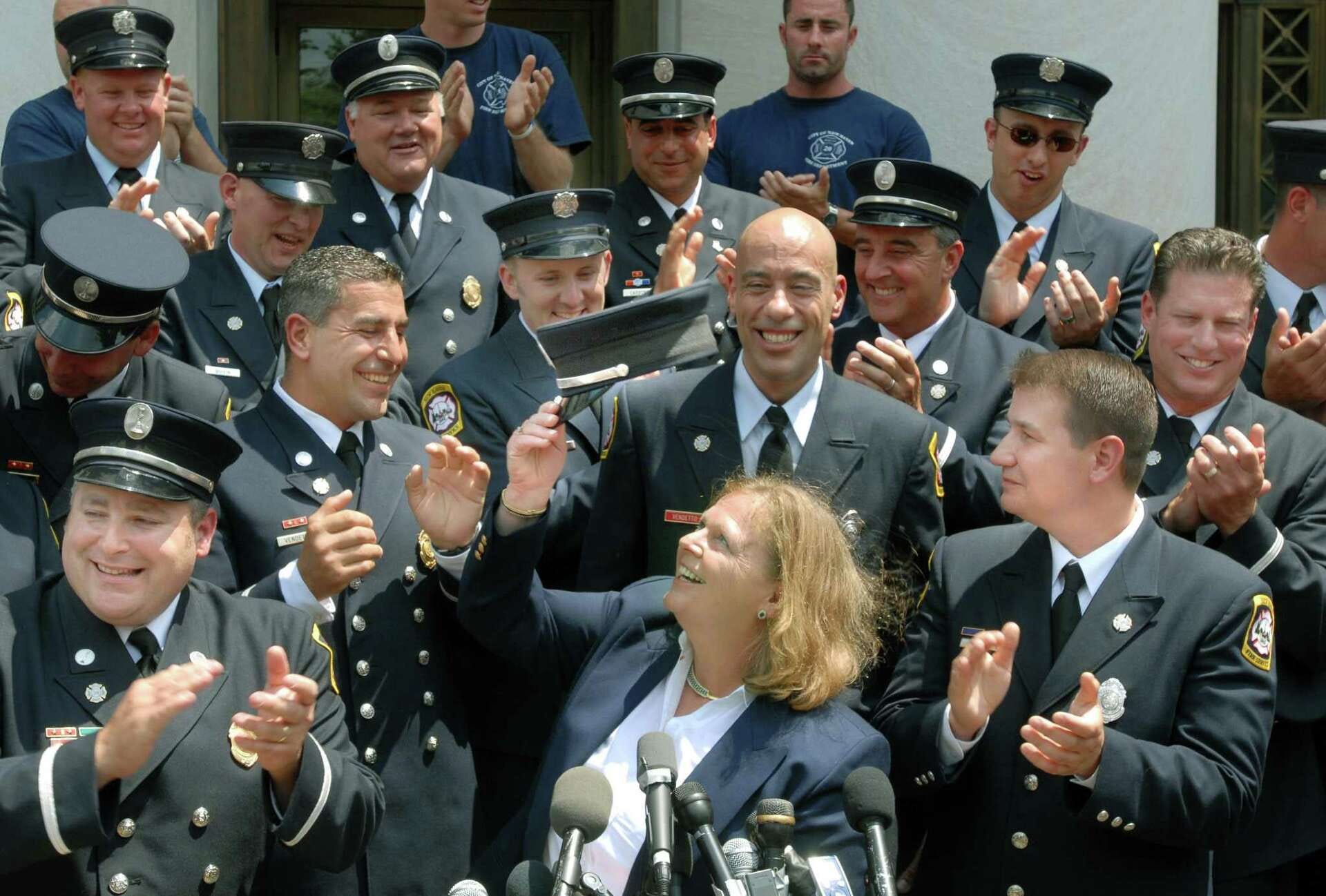
As we have seen, Sonia Sotomayor and her Second Circuit colleagues tried to bury the claims of twenty firefighters—nineteen whites and one Hispanic—that the City of New Haven had discriminated against them on racial grounds by discarding the results of promotional exams. It was bad enough for Sotomayor that Judge José Cabranes—her onetime mentor and fellow Puerto Rican—exposed the shenanigans in his extraordinary dissent from denial of rehearing en banc. It got even worse in January 2009 when the Supreme Court granted certiorari in the case.
The dispute that Sotomayor had tried to dispose of in an unpublished summary order with a single substantive paragraph would now be teed up for national attention. The Supreme Court would be addressing for the first time how to resolve the statutory clash between the City’s duty not to engage in intentional racial discrimination against the plaintiff firefighters and its duty to avoid employment practices that had a “disparate impact” on minority firefighters.
***
Let’s clarify what was at stake in Ricci.
Title VII, as originally enacted in the Civil Rights Act of 1964, prohibits discrimination “because of” race (as well as “color, religion, sex, or national origin”)—i.e., intentional discrimination, also referred to as “disparate treatment.” In its unanimous ruling in Griggs v. Duke Power Co. in 1971, the Supreme Court held that this prohibition also applies to any practice that, although not intentionally discriminatory, “operates to exclude [minorities and] cannot be shown to be related to job performance.” A practice that unintentionally “operates to exclude” minorities beyond some (arbitrary) benchmark is said to have “disparate impact.”
In 1991, Congress effectively ratified Griggs by amending Title VII to spell out how the burden of proof in disparate-impact cases shall operate. In brief: The plaintiff establishes a prima facie case that an employment practice is unlawful by showing that it “causes a disparate impact on the basis of race.” The employer then has the burden to “demonstrate that the challenged practice is job related for the position in question and consistent with business necessity.” If the employer meets that burden, the plaintiff may still succeed by showing that the employer has refused to adopt an available alternative employment practice that has less of a disparate impact and that serves the employer’s legitimate needs.
Let’s make this concrete.
By tossing out the results of the promotional exams, the City of New Haven engaged in racial discrimination against (i.e., disparate treatment of) Frank Ricci, Benjamin Vargas, and their fellow plaintiffs. The City would not have tossed out the results if the racial composition of those qualifying for promotion had pleased it more. The City tried to justify its racial discrimination by claiming that it was acting to avoid disparate-impact liability to those minority firefighters who did less well on the exams.
The issue in Ricci was what standard the City had to meet in order to allow its disparate-impact concerns to trump its duty not to engage in intentional racial discrimination against the plaintiffs.
Consider the polar alternatives.
On one extreme—the position adopted by Sotomayor and her panel colleagues—the City should have broad rein to commit racial discrimination in order to avoid disparate-impact concerns. In the panel’s words, “because the Board, in refusing to validate the exams, was simply trying to fulfill its obligations under Title VII when confronted with test results that had a disproportionate racial impact, its actions were protected.” It sufficed that the potential disparate-impact plaintiffs could meet the minimal prima facie threshold of showing that the exams had a racially disparate impact. It did not matter whether such plaintiffs had any plausible prospect of actually succeeding on their disparate-impact claims. As Judge Cabranes correctly observed, under the panel’s approach, “municipal employers could reject the results of an employment examination whenever those results failed to yield a desired racial outcome — i.e., failed to satisfy a racial quota.”
On the opposite extreme, the City could be required to certify the exam results even when it was certain that doing so would make it liable for disparate-impact discrimination to minority firefighters. This would put the City in a Catch-22 and would seem to put Title VII at war with itself (though one resolution to the war would be to hold the disparate-impact provisions unconstitutional in such instances).
Between these extremes were various other alternatives.
***
Oral argument in Ricci was set for April 22, 2009. As the argument date approached, attention to the case increased. As a savvy and aggressive aspirant for a Supreme Court nomination, Sotomayor knew that a vacancy was likely to arise that spring or summer. She also surely recognized that her escapades in Ricci made it more difficult for Barack Obama to nominate her.
Five days before the oral argument in Ricci, Sotomayor did some extraordinary public cheerleading for Obama. In a speech she delivered to the Black, Latino, Asian Pacific American Law Alumni Association, she proclaimed:
“The power of working together was, this past November, resoundingly proven.”
“The wide coalition of groups that joined forces to elect America’s first Afro-American President was awe inspiring in both the passion the members of the coalition exhibited in their efforts and the discipline they showed in the execution of their goals.”
“On November 4, we saw past our ethnic, religious and gender differences.”
“What is our challenge today: Our challenge as lawyers and court related professionals and staff, as citizens of the world is to keep the spirit of the common joy we shared on November 4 alive in our everyday existence.”
“It is the message of service that President Obama is trying to trumpet and it is a clarion call we are obligated to heed.”
If you don’t think that such comments from a sitting judge are problematic, imagine another judge making similar comments about Donald Trump’s election.
***
Nine days after oral argument in Ricci, Justice David Souter announced his retirement. It took Obama 25 days to select Sotomayor.
As Joan Biskupic recounts in her biography of Sotomayor, White House lawyers were working through their concerns about her actions in the Ricci case. They knew that the Court would issue its decision before the confirmation hearing on Obama’s nominee took place, and they expected the Court to reverse Sotomayor. Indeed, the Administration’s own brief in the case, while broadly supportive of the City, took the position that Sotomayor and her colleagues were wrong to affirm the district court’s grant of summary judgment for the City. But White House lawyers figured that a reversal of Sotomayor could be blamed on conservative justices, and that, with 59 Democrats in the Senate, any controversy over Ricci would not imperil Sotomayor’s confirmation.
***
The Court announced its decision in Ricci in the last announcement session of the term, on June 29—just two weeks before Sotomayor’s confirmation hearing would begin. The Court divided 5 to 4. Justice Anthony Kennedy’s opinion rejected the City’s position that “an employer’s good-faith belief that its actions are necessary to comply with Title VII’s disparate-impact provision should be enough to justify race-conscious conduct.” That “minimal standard,” he explained, would be satisfied “even where there is little if any evidence of disparate-impact discrimination” and “would amount to a de facto quota system.” Drawing on racial-discrimination cases arising under the Equal Protection Clause, the Court instead declared:
We hold that, under Title VII, before an employer can engage in intentional discrimination for the asserted purpose of avoiding or remedying an unintentional disparate impact, the employer must have a strong basis in evidence to believe it will be subject to disparate-impact liability if it fails to take the race-conscious, discriminatory action. [Emphasis added.]
In this case, “the record makes clear there is no support for the conclusion that [the City] had an objective, strong basis in evidence to find the tests inadequate.” While the “degree of adverse impact reflected in the results” sufficed to establish “a prima facie case of disparate-impact liability,” that was merely “a threshold showing of a significant statistical disparity, and nothing more.” That prima facie case “is far from a strong basis in evidence that the City would have been liable under Title VII had it certified the results.” The City “could be liable for disparate-impact discrimination only if the examinations were not job related and consistent with business necessity, or if there existed an equally valid, less-discriminatory alternative that served the City’s needs but that the City refused to adopt,” but, as Justice Kennedy went on to document in detail, there was “no strong basis in evidence to establish that the test was deficient in either of these respects.”
Justice Ruth Bader Ginsburg, joined by Souter and her two other liberal colleagues, dissented. Justice Ginsburg would have adopted the test whether the employer had “good cause” to act. Notably, she distinguished her standard from that applied by the Second Circuit panel and the district court, who in her view mistakenly “focused on [the City’s] intent.” She also explained that her preferred disposition would be to remand the case to the district court to apply her standard.
Sotomayor’s defenders tried to claim vindication from Ginsburg’s dissent. But beyond the fact that Ginsburg disagreed with Sotomayor’s standard and with her affirmance of summary judgment, Ginsburg’s dissent does not remotely suggest that Sotomayor’s effort to dispose of the case in an unpublished one-paragraph summary order was appropriate.
***
Justice Ginsburg also shadow-boxed with Justice Samuel Alito over Obama’s empathy standard. Justice Ginsburg stated in her dissent that the “white firefighters who scored high on New Haven’s promotional exams understandably attract this Court’s sympathy”—as if the majority was indulging its empathy for them (and for the Hispanic plaintiff, Benjamin Vargas, whom Ginsburg somehow ignores). Alito responded:
Petitioners were denied promotions for which they qualified because of the race and ethnicity of the firefighters who achieved the highest scores on the City’s exam. The District Court threw out their case on summary judgment, even though that court all but conceded that a jury could find that the City’s asserted justification was pretextual. The Court of Appeals then summarily affirmed that decision.
The dissent grants that petitioners’ situation is “unfortunate” and that they “understandably attract this Court’s sympathy.” But “sympathy” is not what petitioners have a right to demand. What they have a right to demand is evenhanded enforcement of the law—of Title VII’s prohibition against discrimination based on race. And that is what, until today’s decision, has been denied them.
***
As we shall see, Ricci would play a prominent role in Sotomayor’s confirmation hearing. Unable to defend her actual course of conduct, Sotomayor and the Democratic chairman of the Senate Judiciary Committee would resort to falsehoods.
This 'Confirmation Tales' series should be required reading for every high school civics class [if they even have those anymore].
Although sometimes they call for heroic focus for this reader to follow (non-legal backgound), I truly enjoy this "CT" series by Ed. Many/most of them come from the era when my only source was the WSJ, CSPAN hearings...and yes maybe some NYT/NPR/McNeil-Lehrer. I wasn't getting anything approaching this level of scrutiny and background. Thank you for coloring in some of the blank spaces, Ed.
Disparate-impact law always bothered me - was the goal to correct past racial injustices? How do you measure that...untangle it from other factors? Who decides when we're there - when does it end? Anyway.