


As we have seen, Senate Republicans pressed Sonia Sotomayor on the issue of abortion at her confirmation hearing in 2009 far more than they had pressed Ruth Bader Ginsburg in 1993. One reason for that (also part of my Part 1 post) is that the political tide had shifted in favor of the pro-life position in the meantime, as the atrocity of partial-birth abortion was highlighted in legislation and Supreme Court decisions.
Two other reasons reflect fundamental changes in the politics of the Supreme Court confirmation process itself.
First: The “deference” approach that Senate Republicans had taken to Ginsburg’s nomination (and to Stephen Breyer’s in 1994) was no longer tenable or attractive. Most Republicans were drawn or driven to focus on a nominee’s judicial ideology.
Second: As the Senate re-sorted along ideological lines, the Senate Republican cohort was becoming much more homogeneously conservative.
***
At the end of my clerkship with Justice Antonin Scalia in 1992, I made the unorthodox decision to become a Senate staffer because I wanted to help fight on judicial nominations. Senator Orrin Hatch would be taking over as the senior Republican on the Senate Judiciary Committee in January 1993, and I wanted to assist him in supporting good judicial nominees if George H.W. Bush was re-elected or in opposing bad ones if (as I expected) Bill Clinton became president.
As I’ve recounted (in “That Sure Wasn’t in My Talking Points: Why I nearly fell off my chair”), it was quite a shock to me to discover that Hatch was eager to signal to Clinton that he wouldn’t be fighting Supreme Court nominees over judicial philosophy. Under the deference approach that Hatch applied (and encouraged other Republicans to apply), a senator deciding whether to support or oppose a nominee should ignore or demote considerations of judicial philosophy and focus primarily on whether the nominee meets some suitable standard of intellect, character, and experience.
A senator who adopts the deference approach doesn’t want a Supreme Court nomination to become controversial. He has no interest in exposing aspects of the nominee’s record that will upset his own political base. So it was that Hatch and other pro-life Republicans on the Judiciary Committee didn’t want to make Ginsburg’s record on abortion prominent.
***
I had much more success in spurring Hatch and other Republicans to fight against Clinton’s appellate nominees on the ground of judicial philosophy, especially Eleventh Circuit nominee Rosemary Barkett and Third Circuit nominee Lee Sarokin. Both Barkett and Sarokin were confirmed, as we knew they would be. But we wanted to make Senate Democrats pay a political price for supporting them, and I think that it’s clear that we succeeded.
On top of the votes against Barkett from 36 of the 44 Republican senators, Robert Byrd, the Senate Democratic leader during the Reagan and Bush 41 presidencies, also voted against her. The Sarokin vote was much more striking. With the 1994 elections one month away, six Democrats ended up voting against Sarokin. And they weren’t just any six Democrats. In addition to Byrd, they included majority whip Wendell Ford, future Democratic leader Harry Reid, and, perhaps most notably, a three-term senator from Tennessee, Jim Sasser, who envisioned becoming the Senate majority leader in 1995 after winning re-election to a fourth term.
Political novice Bill Frist made Sasser’s support of bad judges a prominent part of his campaign. He faulted Sasser for recommending Jimmy Carter’s appointment of a federal district judge in Nashville, John T. Nixon, who Frist said had “repeatedly hamstrung the courts by delaying action in death penalty cases,” and he charged that Sasser’s vote for Rosemary Barkett’s nomination showed that “he still hasn’t learned his lesson.” When Frist called on Sasser to vote against Sarokin, Sasser determined that he couldn’t afford to vote for Sarokin and, indeed, that he had to do his best to pretend that he was vehemently against Sarokin. It didn’t work. In a huge upset, Frist defeated Sasser by more than 14 points.
More broadly, Republican Senate candidates in 1994 made Clinton’s lower-court nominations part of their campaigns. Election Night in 1994 was a shocker, as Republicans won control of the Senate by gaining eight seats (as well as control of the House for the first time in decades). Senate Republicans were learning that they could score political points fighting against liberal judicial nominees.
I’ve documented in dozens of posts how Senate Republicans were driven to fight over judicial philosophy in the years from 1994 up to Barack Obama’s presidency and how they won big victories in those fights. So it was entirely predictable that they would challenge Sonia Sotomayor’s nomination on that ground, and Sotomayor’s record provided lots of ammunition. Given the force that Roe v. Wade had with the conservative base, Republican senators had ample incentive to add abortion into the mix.
***
Now that the parties have broadly polarized over ideology, it’s easy to forget how different things were at the time of Ginsburg’s confirmation hearing in 1993. Of the 44 Republican senators, a good 15 or more might be characterized as moderate to liberal. That group included Arlen Specter, Robert Packwood, and John Warner, all of whom voted against Robert Bork’s confirmation in 1987. Only four of the eight Republicans on the Judiciary Committee were pro-life and anti-Roe.
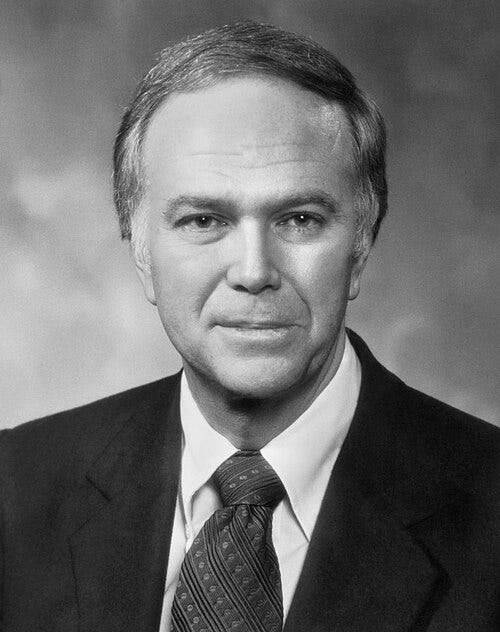
By the time of Sotomayor’s confirmation hearing in 2009, the number of moderate-to-liberal Republicans had dwindled to a half dozen or so, and all seven of the Republicans on the Judiciary Committee were pro-life and anti-Roe. The change is perhaps best encapsulated in Arlen Specter’s decision to abandon the Republican party—and his position as senior Republican on the Judiciary Committee—to become a Democrat just one month before Obama nominated Sotomayor.
It’s much easier to undertake to fight a nomination on ideological grounds when your party is broadly unified on ideology.
When Specter voted against Robert Bork I knew that I could never vote for him again. He made that easier when he flipped to the Democratic Party.
Senator Fetterman is experiencing similar issues now. His refusal to toe the anti Trump line 100 percent of the time has alienated him to the left and DSA factions of his party and he will certainly face multiple primary candidates. I expect him to declare himself an Independent if he runs again.