


Jon Kyl, the former U.S. senator from Arizona, died recently. In its house editorial “Jon Kyl, American Conservative,” the Wall Street Journal pays a fine tribute to Kyl’s broad Senate legacy. I’m going to focus here on his important imprint on judicial nominations, including his bringing a merciful end to George W. Bush’s nomination of Harriet Miers to the Supreme Court in 2005.
***
Jon Kyl was elected to the Senate in November 1994. In filling the seat vacated by moderate Democrat Dennis DeConcini, Kyl was one of eight Republicans to win a seat that had been held by a Democrat. Those victories gave Republicans control of the incoming Senate in 1995.
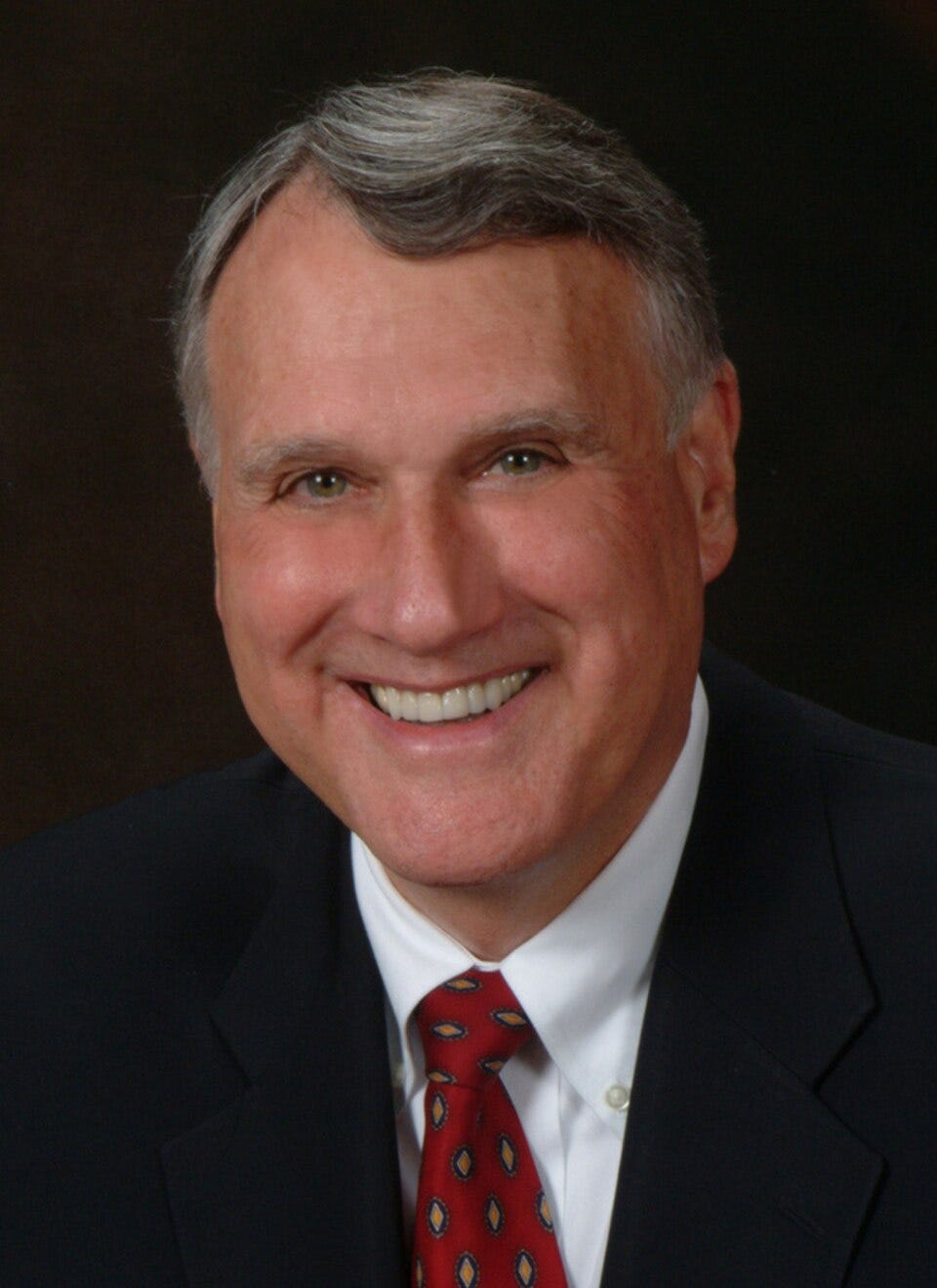
As my boss Orrin Hatch became chairman of the Senate Judiciary Committee, Kyl and three other new senators—Fred Thompson (Tennessee), Mike DeWine (Ohio), and Spencer Abraham (Michigan)—fortified the Republican contingent on that committee.
After my work the previous two years on Bill Clinton’s nominations of Ruth Bader Ginsburg and Stephen Breyer to the Supreme Court, I didn’t stick around for very many months to enjoy the new Republican majority. As I’ve explained, I thought it unlikely that another Supreme Court vacancy was in the offing, and I was tired of internal fights with the front office to get Hatch to advance the principles he avowed.
Even in the short time that I saw him in action, Jon Kyl made quite a favorable impression on me. That impression deepened over the years, as I worked with him and his senior counsel on major judicial-confirmation fights.
Stephen Higgins became Kyl’s staffer on Judiciary Committee right at the outset, in January 1995, and continued as his chief counsel all the way until Kyl’s departure (well, his initial departure) from the Senate 18 years later. I invited Stephen to explain what made Kyl so effective, and here’s what he told me:
Senator Kyl was an exceptional senator and a great person. He was brilliant, a quick study, very attentive to detail while always keeping the big picture in mind. He had sound judgment and high character. He played fair and avoided cheap shots. He was very good at listening to the other side and responding point by point. He was tenacious, indefatigable, fearless, and selfless. He wanted to get good things done and stop bad things from being done, and he didn’t care who got the credit.
***
Senator Kyl became chairman of the Senate Republican Policy Committee at the end of 2002, after victories in November gave Republicans narrow control of the incoming Senate. During the preceding eighteen months (from the time that Senator Jim Jeffords left the Republicans to caucus with the Democrats), Senate Democrats had been able to use their control of the Senate to block any action on judicial nominees of George W. Bush whom they disfavored. Now that they would be back in the minority, Kyl knew that they would escalate their obstruction, especially of Miguel Estrada’s nomination to the D.C. Circuit.
Kyl knew that Senate Democrats were seriously considering filibustering the Estrada nomination. But he was hopeful that they would take the long view and realize how damaging it would be to blow up the Senate’s longstanding consensus against partisan filibusters of judicial nominees. As Kyl’s Policy Committee lawyer, Steven Duffield, has explained (in my interview with him), the filibusters that the Democrats launched made judicial nominations a front-and-center Senate-wide controversy:
The Estrada filibuster and the other filibusters in 2003 that followed it changed everything. All the Senate Republican leaders—Majority Leader Bill Frist, Whip Mitch McConnell, Conference Committee Chair Rick Santorum, Policy Committee Chair Kyl, and Conference Committee Vice-Chair Kay Bailey Hutchison—were personally engaged and focused on breaking these filibusters.
When it became clear that Republicans weren’t going to be able to defeat the filibusters, Kyl directed Duffield to develop the case for eliminating the judicial filibuster by a vote of the majority of senators. The prospect of abolishing the filibuster became real after Republicans expanded their majority to 55 senators in the 2004 elections. As we have seen, the Gang of 14 Agreement in 2005, engineered by Kyl’s fellow home-state senator John McCain, prevented a Senate floor vote on abolishing the filibuster. But the Gang of 14 Agreement, and all of the good things that flowed from it, would never have happened without Kyl’s determination to defeat the judicial filibuster.
***
On September 29, 2005, the Senate confirmed George W. Bush’s nomination of John Roberts as chief justice. Four days later, Bush shocked legal conservatives by nominating his White House counsel Harriet Miers to fill Sandra Day O’Connor’s seat. The White House very much hoped that Miers’s meeting with Kyl would help to quell the conservative revolt against her nomination. Kyl had been ecstatic about Roberts’s performance, both in the private meeting that he had with him and at his hearing. But when Kyl met one on one with Miers for 90 minutes, he appeared to have a very different take. He made no public statement about the meeting, but his silence spoke volumes.
Kyl was instrumental in the collapse of Miers’s nomination. I’m reliably informed (and it’s no surprise at all) that Kyl’s perspective and opinion were very influential with senior White House officials. In late October, Kyl told the White House that Miers’s nomination wasn’t going well and that he didn’t think she’d get confirmed. That message, coming from him, was sufficient to persuade the White House to abandon the nomination. (I believe that I am the first to report these details.)
The following Monday, Bush nominated Samuel Alito to O’Connor’s seat.
***
Jon Kyl retired from the Senate—or so he thought—in January 2013. Five years later, when Donald Trump nominated Brett Kavanaugh to the Supreme Court, Kyl accepted the White House’s invitation to be the Senate sherpa for Kavanaugh. But in an unexpected twist, after John McCain’s death in late August 2018, Arizona governor Doug Ducey appointed Kyl to fill McCain’s seat. So it was that on October 6, 2018, Kyl cast his vote in support of Kavanaugh’s confirmation.
Kyl resigned from the Senate at the end of 2018.
Jon Kyl, R.I.P.