


Late on a Friday afternoon, the day after Sonia Sotomayor’s confirmation hearing ended, I received disconcerting news—and a request—from a Senate Judiciary Committee lawyer: Senator Orrin Hatch, a leading Republican on the committee and my former boss, was wobbly and might vote for Sotomayor. If he went south, it would be more difficult for other Republicans to vote against her. Could I put some pressure on him and reinforce the concerns about her?
Sometimes the target audience for my Bench Memos blog posts is very small, but this might be the only time that I was aiming to reach just one person. And I wanted to reach him quickly. Republican leader Mitch McConnell announced that afternoon that he would be voting against Sotomayor. So who knew when Hatch might declare his position?
***
Late Friday evening, I published two posts.
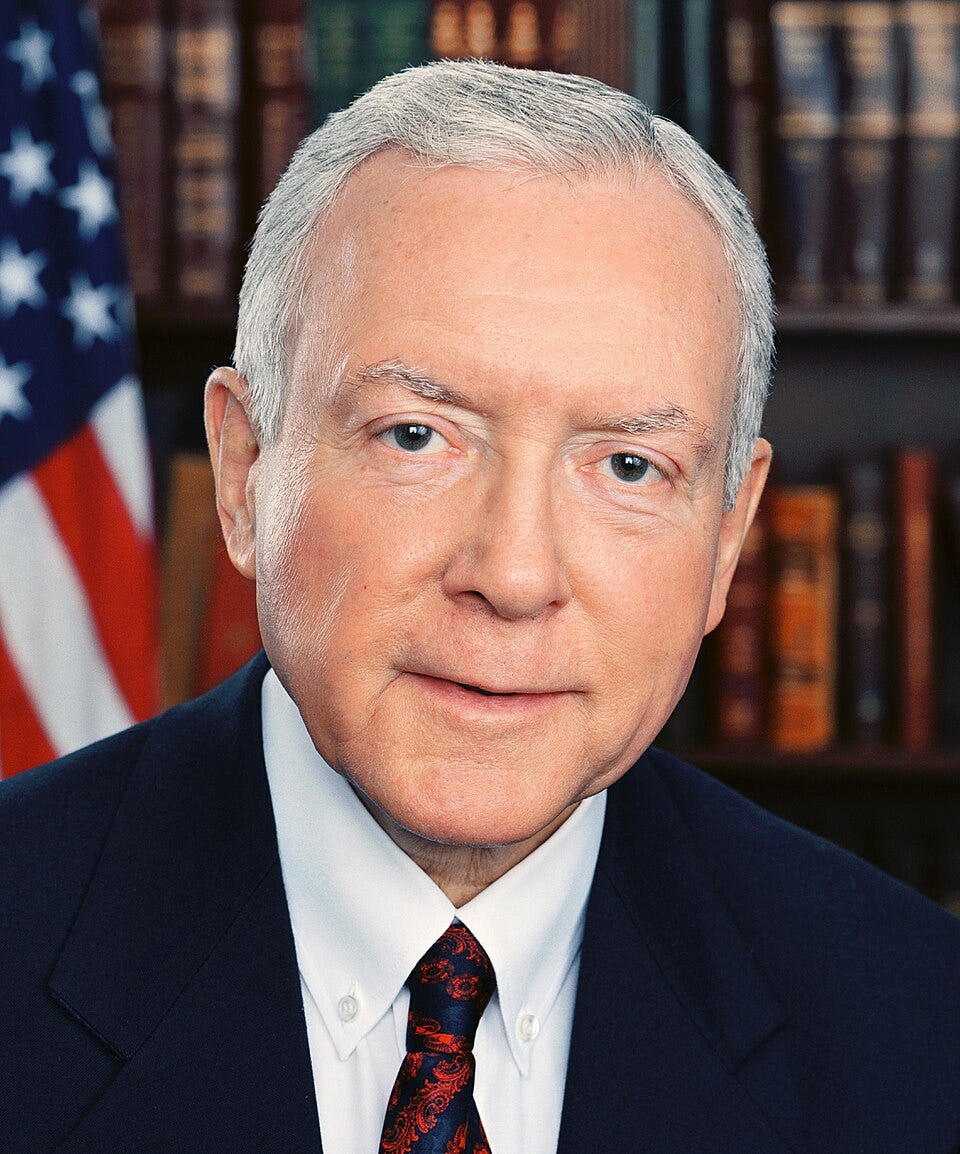
In the first, titled “Sotomayor’s Snookering of Graham and Hatch on PRLDEF Abortion Briefs,” I presented Sotomayor’s implausible testimony on the extreme position on abortion taken by the Puerto Rican Legal Defense and Education Fund during Sotomayor’s tenure on its board. Sotomayor had responded to questions from Senator Lindsey Graham and Senator Hatch. “Is it remotely conceivable,” I asked, “that a board member with a 12-year tenure—a lawyer, no less, who was actively involved in PRLDEF’s legal efforts [—] would be unaware of that position?” To increase my chances of getting Hatch’s attention, I added:
Or was Sotomayor trying to snooker Graham and Hatch? And did she succeed?
In the second post, “Sotomayor’s Cover-Up on Foreign Law,” I completed my account of Sotomayor’s “incredible obfuscation of her support of freewheeling resort to foreign and international law to redefine the meaning of provisions of the American Constitution.” I knew that this was an issue that Hatch cared a lot about.
Late the following Monday, Sotomayor submitted her responses to written questions from Republican senators. I was heading away on a family vacation the following morning but raced to do a late-night post showing how her responses on foreign law showed that her “oral testimony ought to be recognized to be scandalously deceptive and to provide sufficient cause for any senator to oppose her confirmation.”
***
One week later, I was driving to the airport to return home from my vacation when I noticed that I had received a voicemail. At a stoplight, I listened to the voicemail:
Ed, this is Orrin. How doggone stupid do you think I am?
Yes, he actually said doggone. In my amusement, I didn’t pay close attention to what he said after that, but I’m sure that he complained that I underestimated his grasp of Sotomayor.
The timing of Hatch’s call was telling. As I was to discover, that same morning he had finally committed himself publicly to opposing Sotomayor, as he joined his fellow committee Republicans (all but Graham) in voting against favorably reporting Sotomayor’s nomination to the Senate floor.
In his statement, Hatch implicitly repudiated the deference standard that he had applied to the nominations of Ruth Bader Ginsburg and Stephen Breyer when I worked for him in 1993 and 1994. On top of legal experience and academic and professional achievement, he said, a nominee’s “qualifications also include the more important element of judicial philosophy, or a nominee’s proper understanding of the power and proper role of judges in our system of government.” Hatch faulted Sotomayor for “troubling statements that appear to conflict with the impartiality … that the oath of judicial office requires.” He criticized her for “saying that foreign law will be ‘very important’ in thinking about legal issues.”
Back at work the following day, I wrote about the committee vote and happily gave Hatch credit: “I’d especially like to highlight that I was wrong in thinking that Sotomayor’s deceptive testimony had snookered Senator Hatch.”
***
If you had told me back in 1993 or 1994 that Senator Hatch would vote against the first Hispanic nominee to the Supreme Court—and a female, at that—I would not have believed you. That he did so powerfully illustrates how Republican senators shifted from deferring to a Democratic president’s power to select nominees to fighting those nominees on the ground of judicial philosophy.